Coral Spawning 2022.
| Marine Discoveries
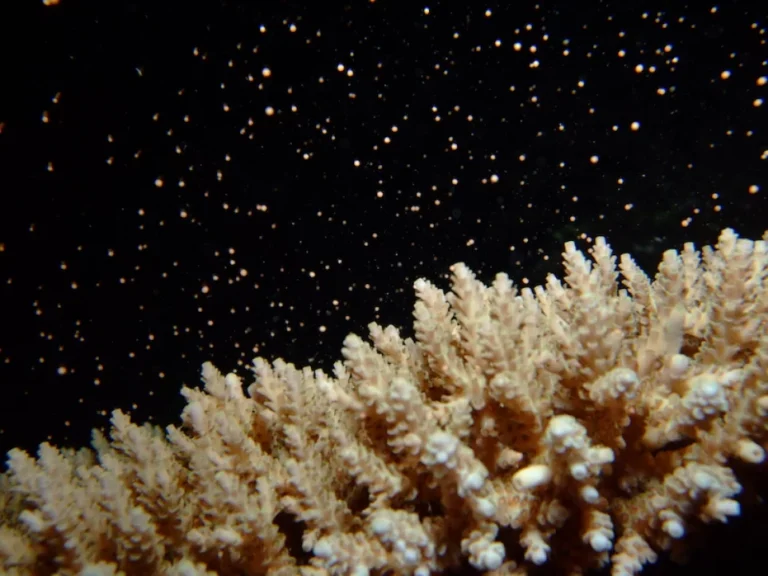
Last week saw the yearly spectacle of the Great Barrier Reef’s coral spawning event! The time of year where all corals get busy making babies happens usually just once a year and this year was special as always but for more reasons than normal. Researchers and Marine Biologists from around the world jumped into the waters of the biggest reef in the world to witness this spectacle and, as always, ground breaking science occurred…
So what is coral spawning and why do marine biologists treat this yearly event like the marine equivalent of Christmas?
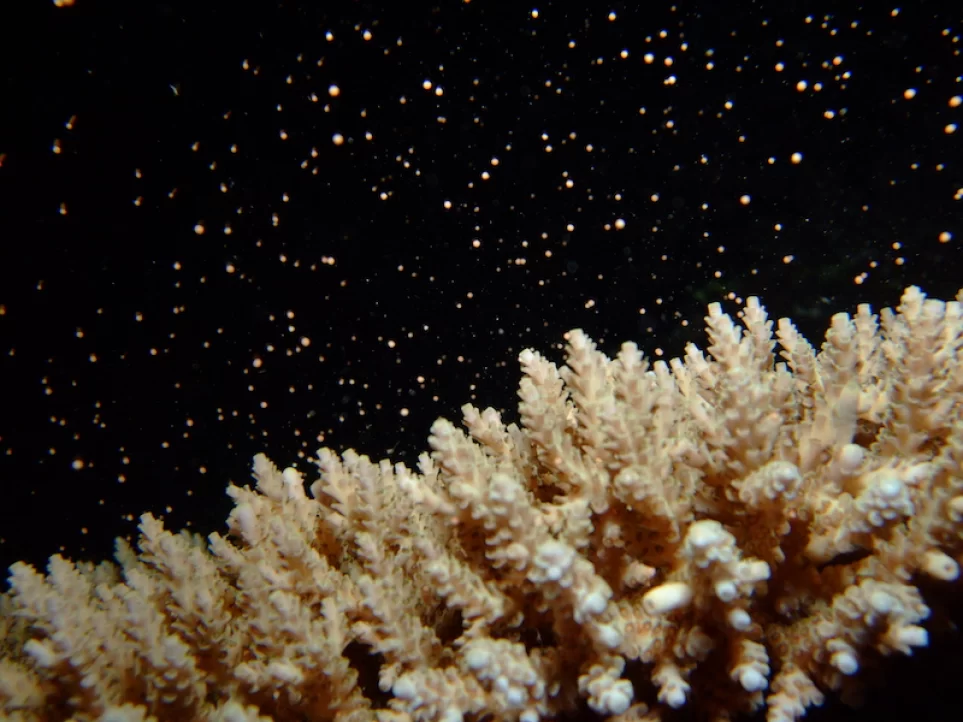
Coral spawning, also known as broadcast spawning, is how most corals around the world reproduce. Although a small percentage of corals reproduce through brooding, literally popping out a mini but fully formed coral polyp that is ready to settle, the other 83% spawn. Two to six nights after the full moon, usually in November here on the Great Barrier Reef, all our broadcasting corals release bundles of sperm and egg into the water at the same time. The genetic material then floats to the surface where it can mingle, swiping right on the other bundles of eggs and sperm that are floating around with them, and from there, form coral larvae.
The coral larvae will settle on the reef in anything from a few days to a couple of weeks. To settle down, they look for a pink algae called Coralline algae. Its still unknown as to why they choose this algae exactly but there are many different theories floating around on the wide world of the internet. What is known though is that some species of coral can even work out the different species of Coralline algae and choose their favourite, pretty amazing right?
Now the most amazing part of the coral spawning event is that we’ve only known about spawning for around 40 years. This means it is still very new for science, especially as we can only really study it once every year! So there is much we don’t know and every spawning event is a chance to find out something new about their reproduction and resilience.
This year was special. Why you may ask? Well…
Lastly, let’s have a little throwback to our primary school fish drawings…ah right, the iconic fish scales- how could we forget about those! In some species, fish scales can determine years in a fish’s life because they form concentric ridges. But not all scales tell a true story, often ages are inaccurate or underestimated because the annuli in the scales crowd near the edge making it hard to count, or simply because some fish just shed and regenerate their scales.
As the saying goes, there are plenty of fish in the sea – there’s no way you’re catching all of them and collecting data! That being said, all of these tools are of great importance and help provide an estimation of fish growth rates. This is crucial for fisheries management, and helps researchers understand and study the full life cycle of a fish.
Written by Anshi Sood, December Marine Discoveries Intern
About the Author

Marine Discoveries
Marine Biologist
Abby has had a love of the ocean since day one. If she ever went missing as a child, you could guarantee to find her somewhere near fish, even if it was the fish counter in a supermarket! That passion continued throughout her life, becoming a diver at 15, a dive master at 19 and a dive instructor at 22.